About This Project
This project explores the fundamentals of AM (Amplitude Modulation) radio communication through a hands-on implementation using Python and Matplotlib. The system demonstrates the complete signal processing pipeline—from capturing live audio input, modulating it onto a carrier frequency, and then demodulating it back to recover the original voice signal.
Technical Overview
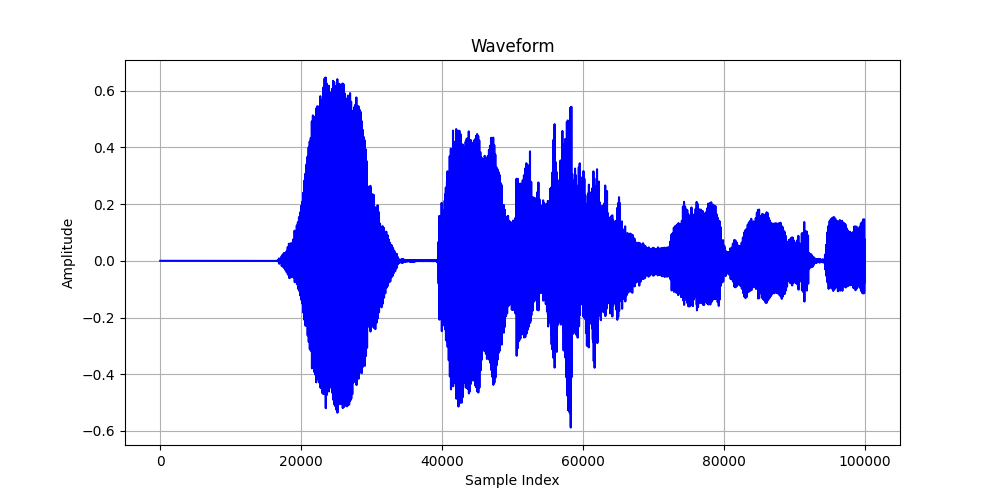
The project implements a full AM radio transmission and reception system in software. Using Python's audio libraries, I recorded real-time voice data from users and visualized the raw audio waveforms using Matplotlib. The recorded signals were then modulated onto a carrier frequency using amplitude modulation techniques, simulating how AM radio broadcasts encode information.
The modulated signal was then processed through a demodulation algorithm to extract the original voice data, demonstrating the complete transmission and reception cycle. Throughout each stage—recording, modulation, transmission, and demodulation—Matplotlib provided real-time visualization of the waveforms, allowing for clear observation of how the signal transforms through each processing step.
Key Features
- Real-Time Audio Capture: Live voice recording and waveform visualization
- AM Modulation: Implementation of amplitude modulation to encode voice signals onto carrier frequencies
- Signal Demodulation: Extraction of the original voice signal from the modulated carrier wave
- Dynamic Visualization: Real-time Matplotlib rendering showing signal transformations at each processing stage
- Signal Analysis: Visual comparison between original, modulated, and demodulated waveforms
Technologies Used
- Python for signal processing and audio handling
- Matplotlib for real-time waveform visualization and analysis
- NumPy for mathematical operations and signal manipulation
- Audio libraries for capturing and processing live voice input
Presentation
View the full project slideshow presentation →
Source Code
Screenshots & Diagrams