Introduction
Rose City Robotics was an intensive robotics program that took place over Thanksgiving break. The program was run by the father of one of my peers, who has professional experience in robotics and autonomous systems. You can learn more about the instructor here. I joined the program because I wanted hands on exposure to real robotics software stacks and sensing systems beyond classroom projects. Going into the program, I was especially interested in learning how robots perceive their environment and make decisions in real time.
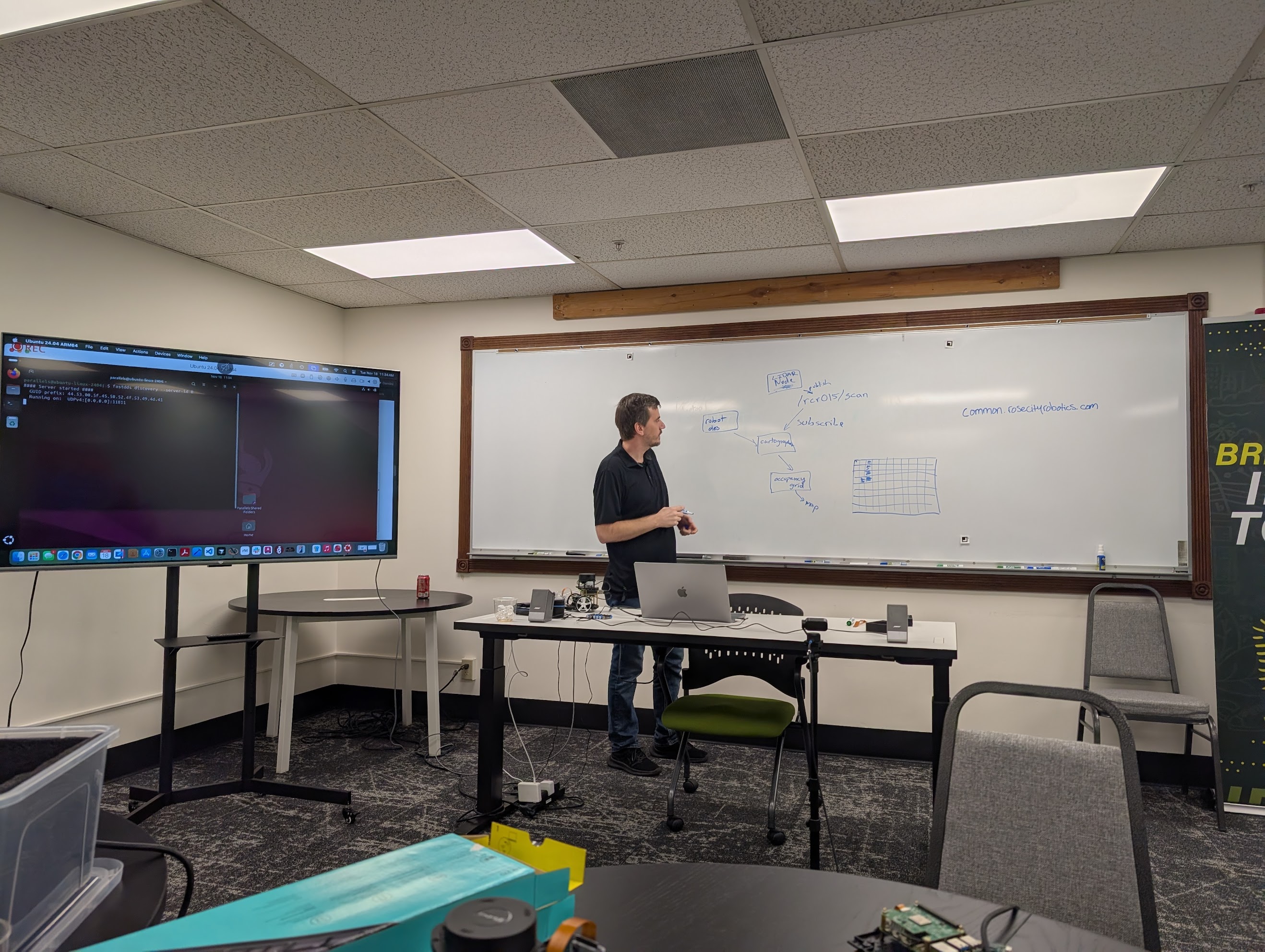
The Rose City Robotics classroom and learning environment
What I Learned
Throughout the program, we focused on core concepts in autonomous robotics, including perception, localization, mapping, and control. We worked directly with mobile robots equipped with LiDAR sensors and cameras, which allowed us to explore how software interacts with physical hardware. A major emphasis was placed on understanding how different subsystems communicate and how sensor data is transformed into actionable information for the robot.
Key Skills Developed:
- Implementing SLAM using LiDAR data for mapping and localization
- Teleoperating robots using keyboard based control systems
- Applying YOLO object detection to identify objects within images
- Working with real time sensor data and robotics software pipelines
- Collaborating in small teams to debug and iterate on robotic systems
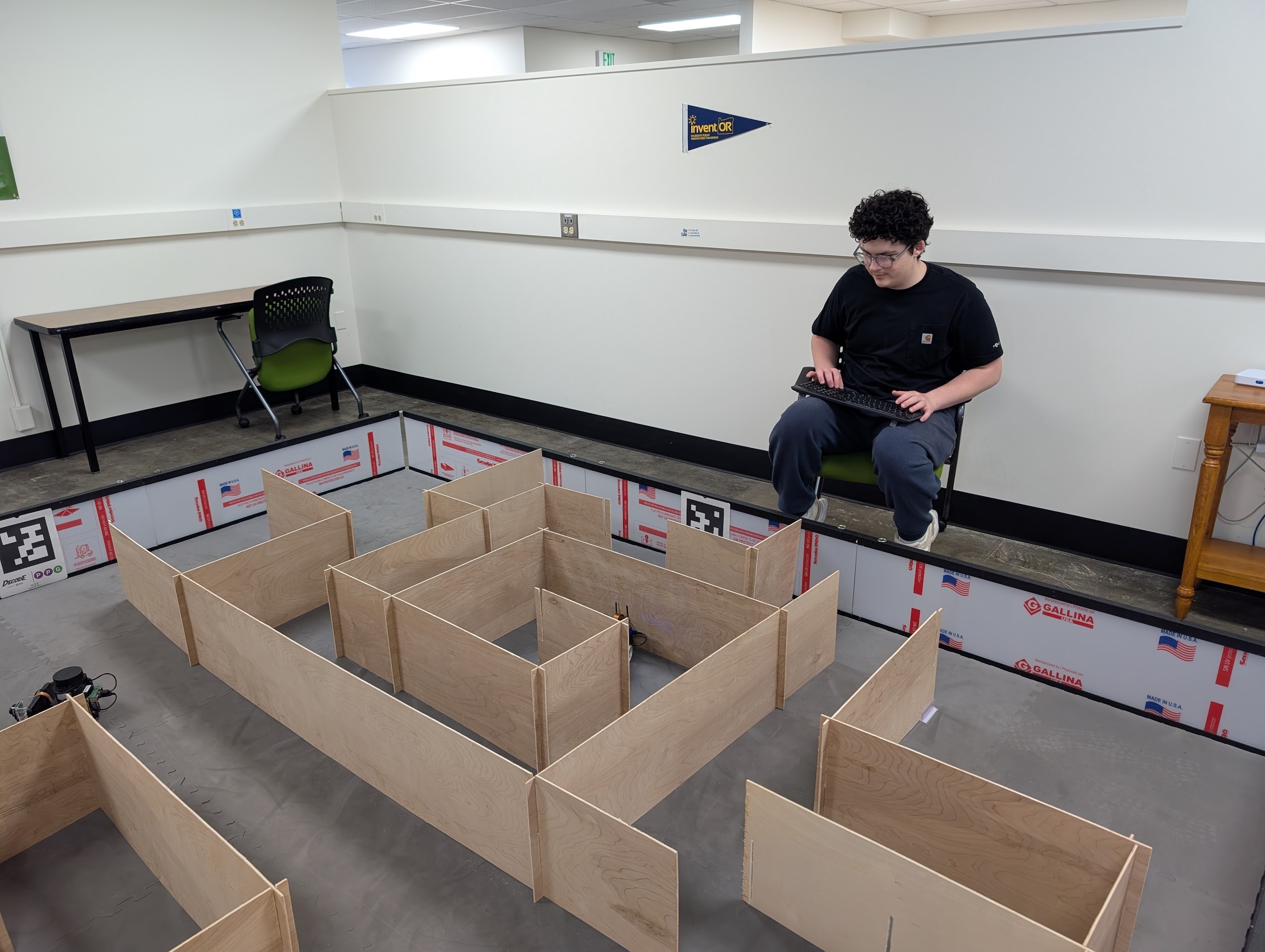
One of the robots I programmed during the class
Projects and Challenges
During the program, we worked on multiple robotics challenges that combined sensing, perception, and control. One of the main projects involved running SLAM algorithms using LiDAR data to generate maps of the environment while tracking the robot’s position. We also implemented teleoperation using a keyboard interface, which required careful handling of control inputs to ensure smooth and safe robot motion. Another major challenge involved using YOLO based computer vision models to identify and classify objects within camera images. Integrating perception with control highlighted how small errors in detection or localization can significantly impact robot behavior. Debugging these systems required systematic testing and close attention to sensor outputs.
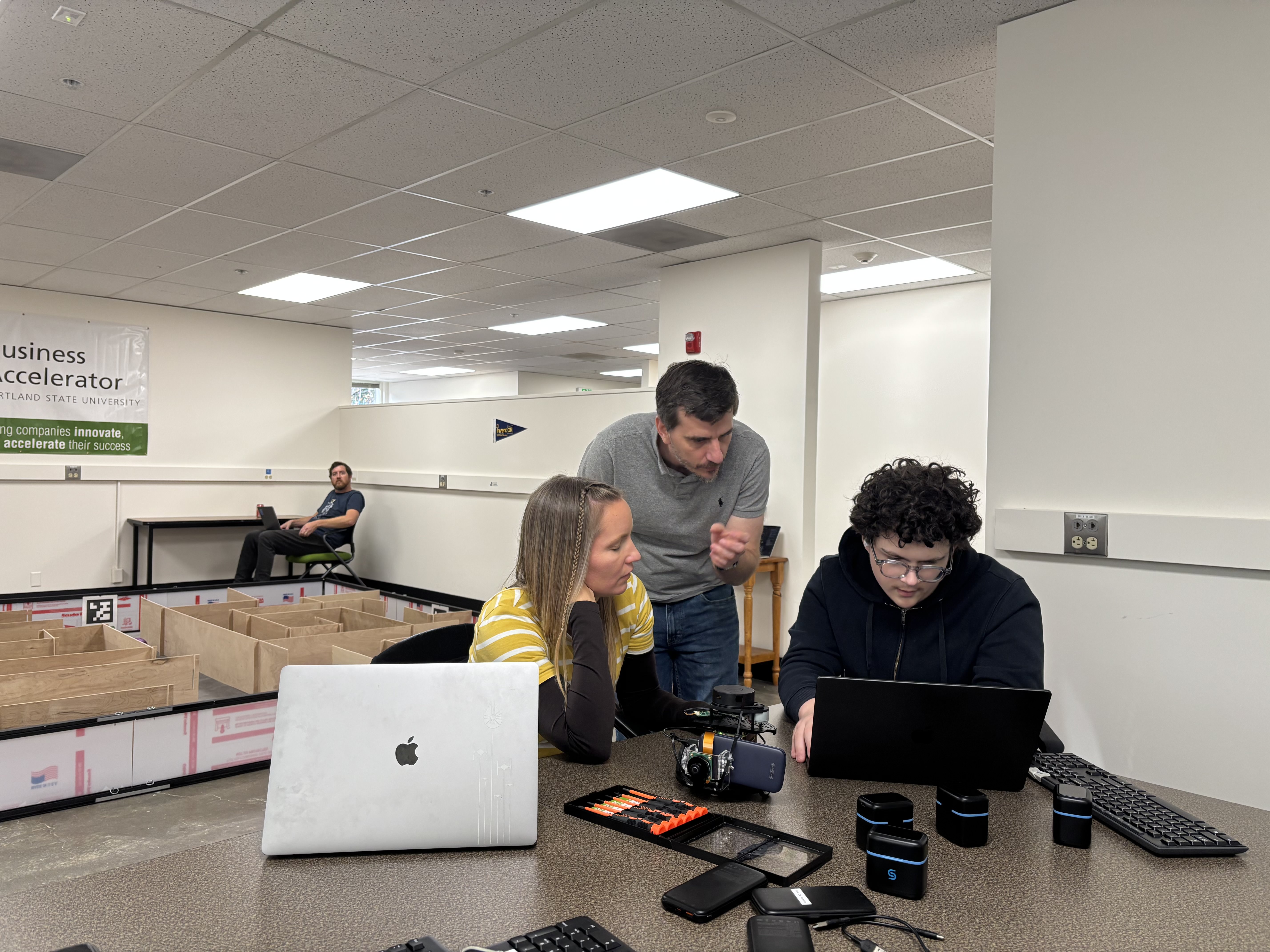
Collaborating on robotics bug
Impact on My Journey
This program had a strong impact on my interest in robotics, computer science, and autonomous systems. Working with real robots and industry relevant tools helped me better understand how theoretical concepts are applied in practice. The experience reinforced my interest in pursuing more advanced robotics and AI projects, particularly those involving perception and real time decision making.
Lessons Learned
One of the most important lessons from the program was the importance of system integration. Even when individual components like perception or control work well on their own, the full system can fail if they are not carefully coordinated. I also learned the value of clear debugging strategies and incremental testing when working with complex robotic systems. For students considering a similar program, I would recommend building a strong foundation in programming and being comfortable experimenting, breaking things, and learning from failures.
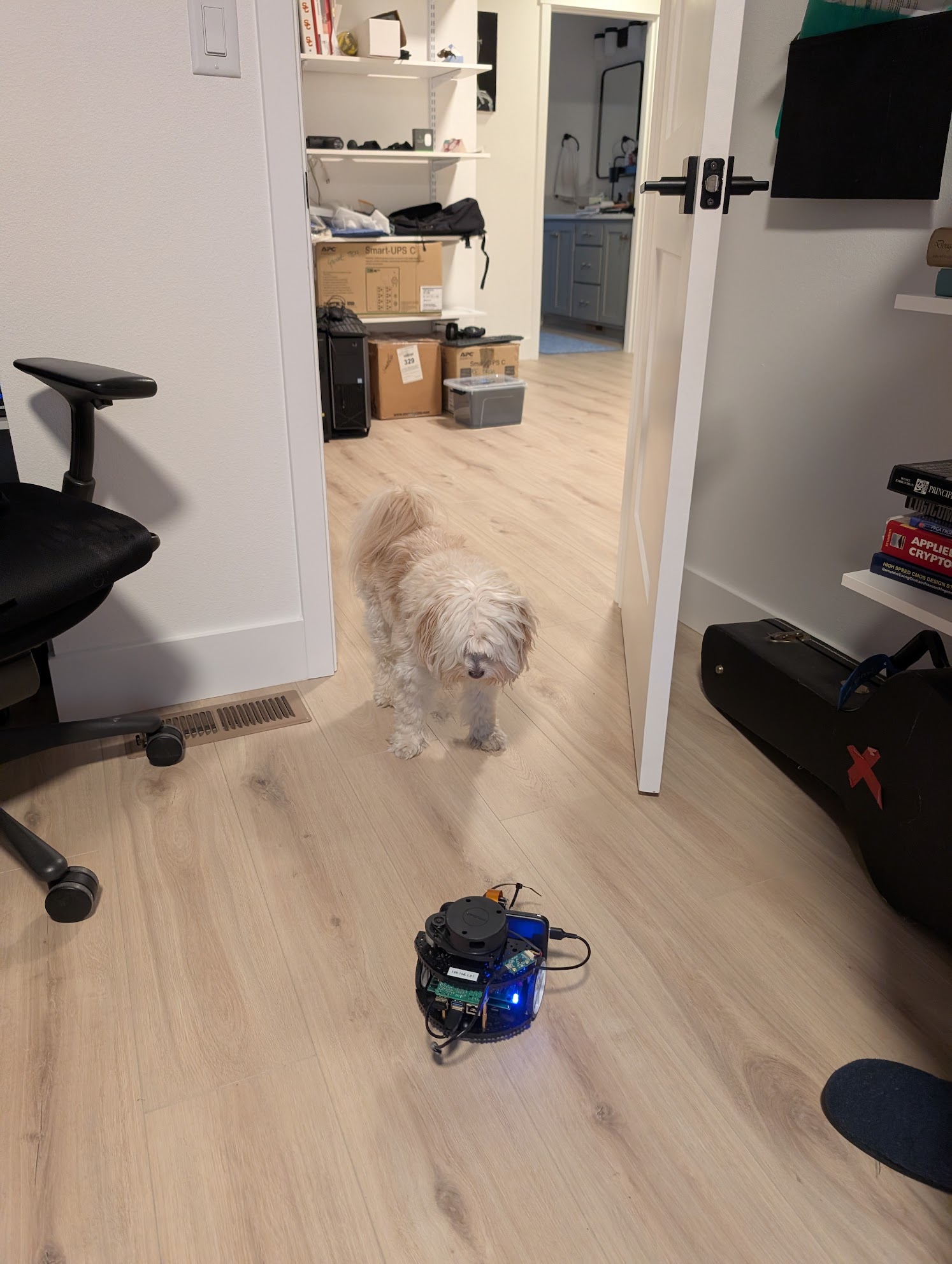
picture of the robot next to my dog
Conclusion
Overall, Rose City Robotics was a challenging and rewarding experience that gave me meaningful exposure to real world robotics systems. The program helped bridge the gap between theory and application and played an important role in shaping my interest in robotics and autonomous technologies.
Related Article
One of the mentors involved in the program wrote an article about Rose City Robotics and my participation in it.
Read the article here